
- Home
- PC Class vs CB Class ATS: How to Choose the Right Automatic Transfer Switch
PC Class vs CB Class Automatic Transfer Switch: How to Choose the Right Automatic Transfer Switch
When designing or upgrading an industrial power distribution system, understanding PC Class vs CB Class ATS(Automatic Transfer Switch) selection criteria is critical to maintaining power continuity and protecting downstream equipment. While both automatic transfer switch types switch power from a main source to an emergency generator or secondary grid, their internal architectures, switching speeds, and protection capabilities differ significantly.
Selecting the wrong switch class can lead to unnecessary equipment downtime, nuisance tripping, or uncoordinated upstream protection during short-circuit events. This guide breaks down the structural differences, 7 critical comparison factors, and practical engineering selection rules for low-voltage power systems.
Key Takeaways for Quick Selection
- PC-Class ATS(Automatic Transfer Switch): Built with a dedicated load-break/isolation switch structure. It has no built-in thermal-magnetic overcurrent trip units. It offers extreme short-time withstand current (Icw), rapid transfer speed (<50 ms to 100 ms), and high mechanical durability. Ideal for mission-critical loads like hospitals, data centers, and marine systems.
- CB-Class ATS(Automatic Transfer Switch): Built using two mechanically interlocked circuit breakers equipped with overcurrent and short-circuit trip units. It provides self-contained protection, reduces panel space, and lowers initial installation costs, but has slower transfer times (100 ms to 300 ms). Ideal for standard commercial buildings, HVAC systems, and general industrial loads.
What is a PC-Class ATS (Automatic Transfer Switch)?
A PC-class automatic transfer switch (Power Class / Pure Contactor Class) is a specialized switching device designed purely for transferring electrical loads between two power sources. Governed under international standards such as IEC 60947-6-1, a PC-class switch is capable of making, carrying, and breaking currents under normal circuit conditions, as well as carrying short-circuit currents for a specified time (Icw).
 [ Primary Source A ]  ───┐
                          ├──> [ High-Speed Interlocked Contact Mechanism ] ──> [ Critical Load ]
[ Secondary Source B ] ───┘       (No Thermal/Magnetic Trip Elements)
Core Architecture & Working Principle
Unlike standard circuit breakers, a PC-class ATS(Automatic Transfer Switch) does not integrate thermal or magnetic tripping mechanisms inside the main switching unit. Instead, it utilizes a heavy-duty double-throw contact design driven by an electromagnetic driver or motor-operated mechanism.
Because it does not monitor overloads or trip on its own, it relies on upstream circuit breakers or fuses for overcurrent protection. This intentional design prevents the switch itself from tripping unexpectedly during temporary current surges or transient overloads.
Key Advantages for Industrial Power Systems
High Short-Time Withstand Current (Icw): Capable of handling severe short-circuit fault currents without contact welding or mechanical destruction while waiting for upstream protection to clear the fault.
Rapid Switching Time: Typical transfer duration ranges from 30 ms to 80 ms, making it ideal for sensitive loads that cannot tolerate prolonged power gaps.
High Mechanical Life: Designed for thousands of mechanical operations without significant degradation of the contact surfaces.
What is a CB-Class ATS (Automatic Transfer Switch)?
A CB-class automatic transfer switch (Circuit Breaker Class) is constructed by mechanically and electrically interlocking two molded case circuit breakers (MCCBs) or miniature circuit breakers (MCBs) driven by a shared motorized actuator.
[ Source A ] ──> [ MCCB / MCB 1 (With Thermal-Magnetic Trip) ] ───┐
                                                                  ├──> [ Load ]
[ Source B ] ──> [ MCCB / MCB 2 (With Thermal-Magnetic Trip) ] ───┘
Built-In Protection Mechanics
Because a CB-class ATS(Automatic Transfer Switch) incorporates standard circuit breakers as its main contact system, it inherently possesses overcurrent, short-circuit, and thermal trip capabilities. If an overload or fault occurs on the downstream load line, the active breaker inside the switch will trip open automatically to clear the fault.
Pros and Cons in Panel Building
Pros (Cost & Space Savings): Eliminates the need to install separate, independent protective circuit breakers upstream or downstream in the control panel. This reduces overall switchboard dimensions, simplifies wiring, and lowers initial capital expenditure for general industrial distribution boxes.
Cons (Selective Coordination Challenges): If a short-circuit fault occurs downstream, the breaker inside the ATS may trip directly. If it trips into the “OFF” position, the automated controller may try to switch over to the secondary source—potentially closing the backup generator onto an active short circuit.
PC-Class vs CB-Class ATS(Automatic Transfer Switch): 7 Critical Differences Compared
To help engineering teams and electrical panel builders select the correct device, evaluating PC Class vs CB Class ATS technical parameters is essential. The comparison table below highlights the core differences across 7 key engineering metrics:
| Comparison Metric | PC-Class ATS | CB-Class ATS |
|---|---|---|
| Main Internal Component | Switched-based / Load-break switch structure | Dual interlocked circuit breakers (MCCB / MCB) |
| Overcurrent Protection | None (Relies on upstream breakers/fuses) | Built-in thermal and magnetic trip elements |
| Average Transfer Speed | 30 ms - 100 ms (Fast) | 100 ms - 300 ms (Moderate) |
| Short-Time Withstand Current (Icw) | Extremely High (Handles fault stresses) | Moderate (Limited by internal breaker characteristics) |
| Selective Coordination | Outstanding (Prevents nuisance isolation) | Complex (Risk of tripping during transfer) |
| Footprint & Installation Cost | Requires upstream protection; higher unit cost | All-in-one protection; lower overall panel cost |
| Target Application | Critical facilities, emergency power, heavy industry | Commercial buildings, small factories, general lighting |
Detailed Breakdown of Key Differences
1. Transfer Time & Contact Dynamics
During a power outage, speed is essential. PC-class switches employ single-shaft, solenoid-driven mechanisms that instantly throw contacts from Source A to Source B. With switching speeds often under 80 ms, connected devices with small hold-up times (such as industrial PLCs or variable frequency drives) are less likely to reset or fault out. CB-class switches must physically drive the breaker handles via a motor drive assembly, resulting in longer travel time.
2. Fault Withstand Capability (Icw vs Icu)
When evaluating PC Class vs CB Class ATS(Automatic Transfer Switch) capabilities, fault withstand capacity is a major factor. PC-class switches prioritize structural robustness over self-protection. Their silver-alloy contacts are engineered with high spring pressure and large arc-chutes to withstand thermal and dynamic stresses (measured in kA for 0.1s to 1s) under fault conditions. CB-class switches rely on their rated ultimate short-circuit breaking capacity (Icu), meaning they are designed to open and clear the fault rather than withstand it.
How to Choose the Right ATS(Automatic Transfer Switch) for Your Project
Selecting between PC and CB class depends entirely on your project’s reliability requirements, budget constraints, and coordination scheme.
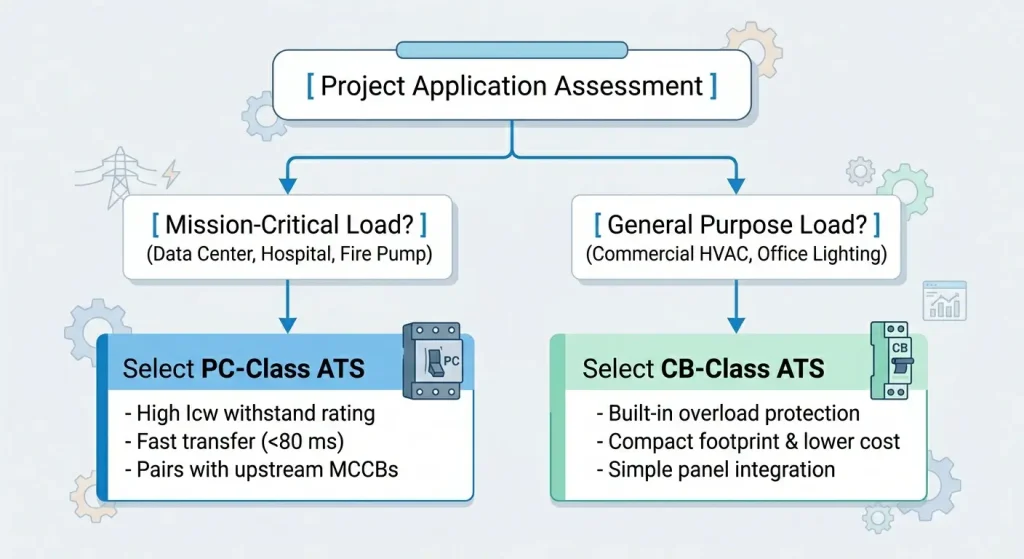
Scenario 1: Mission-Critical Facilities (Choose PC-Class)
For hospitals, data centers, wastewater treatment plants, and marine power systems, power continuity is paramount.
Why PC Class: In these environments, you do not want an ATS to trip offline due to a minor transient current spike. Upstream distribution breakers should handle protection selectively. The high Icw rating of a PC-class switch ensures the switch remains fully operational even after experiencing a heavy downstream fault cleared by a downstream branch breaker.
Scenario 2: Standard Commercial & Industrial Panels (Choose CB-Class)
For commercial real estate, telecommunication base stations, standard manufacturing workshops, or residential generator backup boxes.
Why CB Class: Space within local distribution boards is often limited, and budget constraints exist. Using a CB-class ATS delivers transfer automation and overload/short-circuit protection in a single integrated enclosure, cutting both component purchasing costs and wiring labor.
Sourcing Considerations: What Quality Testing Matters?
When evaluating OEM/ODM low-voltage component manufacturers for ATS supply, engineers should ensure the products comply with rigorous international testing standards:
Compliance with IEC 60947-6-1: Ensure the manufacturer provides third-party test reports verifying compliance with IEC 60947-6-1 (or equivalent EN standards) specifically for automatic transfer switching equipment.
Temperature Rise Testing: High-current ATS units operating inside sealed IP55 or IP65 enclosure cabinets must maintain low contact resistance. Thermal imaging tests during full-load current runs ensure long contact longevity.
Mechanical Endurance Cycling: Verify that the switch mechanism has undergone 10,000+ electrical and mechanical operations under load to avoid mechanism jamming over years of field deployment.
For more details on low-voltage standard compliance, review our technical guide on Understanding Low-Voltage Circuit Breaker Certifications: CE, IEC 60947, and ISO Standards.
Frequently Asked Questions (FAQ)
Q1: Can a PC-class ATS(Automatic Transfer Switch) trip on overload?
No. A PC-class ATS does not contain thermal or magnetic trip elements. It will not automatically open its contacts on overload. Overcurrent protection must be provided by an appropriately sized circuit breaker or fuse installed upstream of the switch.
Q2: Is PC-class ATS(Automatic Transfer Switch) always more expensive than CB-class?
While the standalone unit cost of a PC-class ATS is generally higher due to its heavy-duty silver contacts and specialized switching mechanism, the total system cost depends on your setup. Since PC-class requires separate protective breakers upstream, initial hardware costs are higher. However, for critical applications, the reduction in downtime and maintenance costs far outweighs the initial price difference.
Q3: What is the main international standard governing ATS devices?
The primary global standard governing automatic transfer switches is IEC 60947-6-1 (Low-voltage switchgear and controlgear – Part 6-1: Multiple function equipment – Transfer switching equipment), which defines requirements for transfer performance, operational capability, and short-circuit withstand.
Conclusion & Engineering Support
Understanding the key differences in PC Class vs CB Class ATS applications comes down to balancing system criticalities against budget and space constraints. If your project demands maximum fault withstand, fast switching times, and uncompromised power continuity, PC Class ATS is the industry-standard choice. For compact installations requiring integrated overcurrent protection at an economical price point, CB Class ATS offers an efficient, all-in-one solution.
Need Customized Engineering Specs or Factory Quotes?
Zhejiang Manfu Power Technology Co., Ltd. manufactures certified PC-Class and CB-Class Automatic Transfer Switches engineered for global OEM partners and industrial project builders.
Explore Product Lines: Check out our full range of Automatic Transfer Switches (ATS)
Get Technical Assistance: Contact our engineering support team for detailed CAD schematics, wiring diagrams, and direct factory pricing.
Get In Touch
Partner with a Trusted Electrical Manufacturer
Looking for high-reliability electrical components, OEM/ODM solutions, or custom bulk pricing? Our engineering team is ready to support your project requirements.
Direct Call
+86 (566) 456-7890
Email Inquiry
support@zjmnfu.com
Request a Fast & Free Quote
Fill out the form below and our sales team will respond with product specifications and pricing within 24 hours.
Other Related Blogs
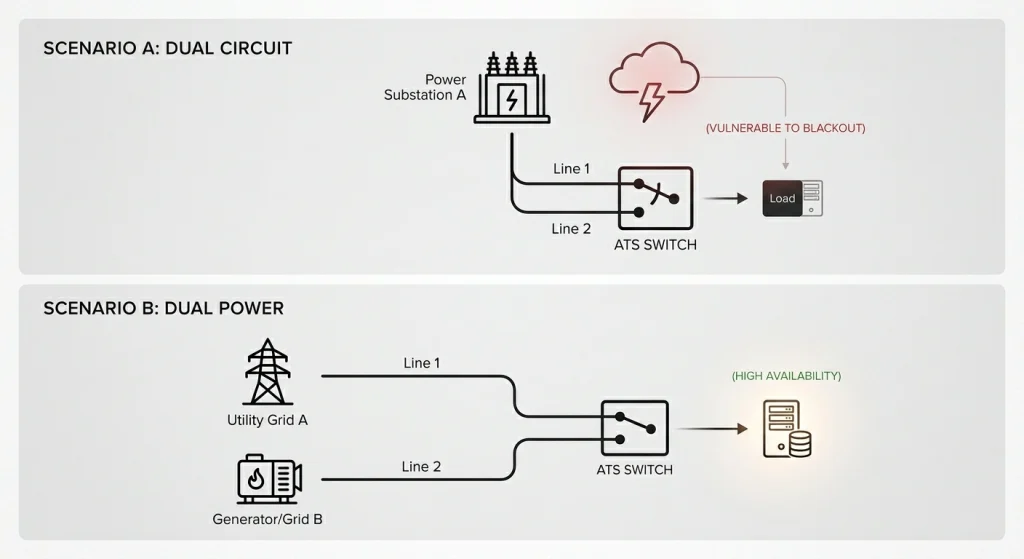
- Product Knowledge, 未分类
Dual Power Supply vs Dual Circuit: What is the difference?
Home Dual Power vs Dual Circuit ATS: Clear Engineering Differences If you ask…
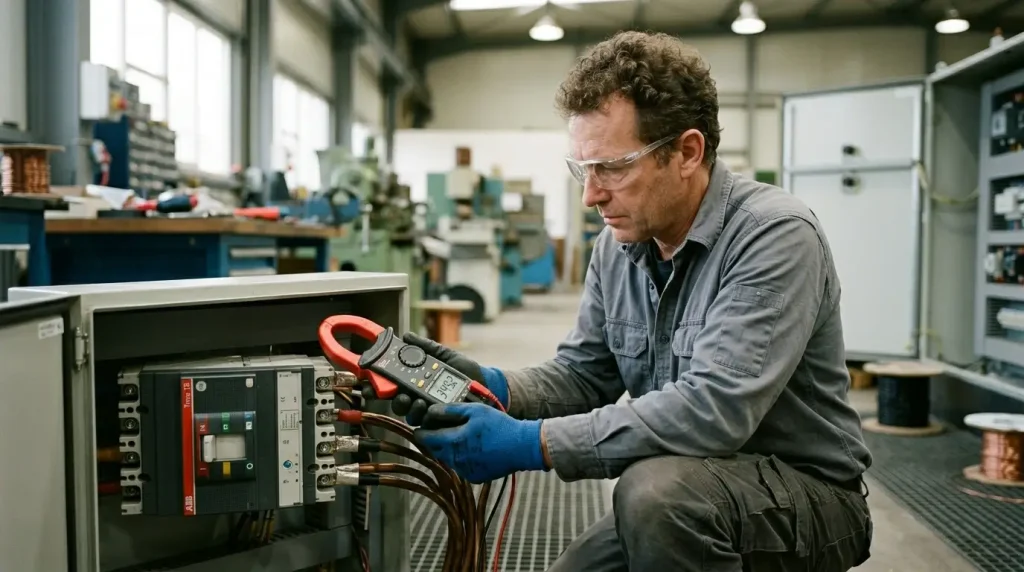
- Product Knowledge, 未分类
Industrial Circuit Breaker Tripping Causes: Fixes & Prevention Guide
Home Industrial Circuit Breaker Tripping Causes: Field Troubleshooting & Fixes Understanding industrial circuit…
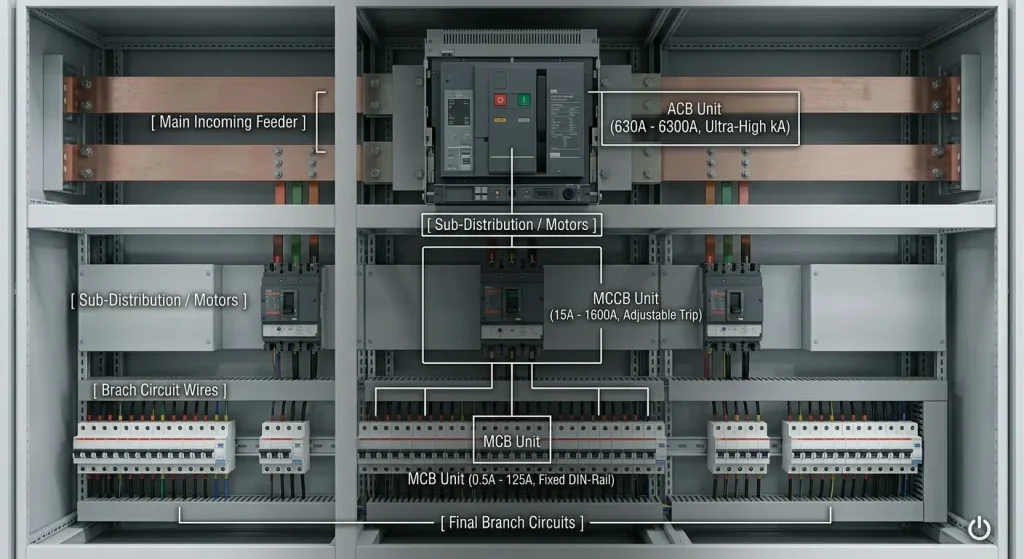
- Product Knowledge, 未分类
Difference Between MCB MCCB and ACB: Complete Selection Guide
Home Difference Between MCB MCCB and ACB: Complete Selection Guide Navigating the difference…